
3 Signs Your GTM Is Misaligned
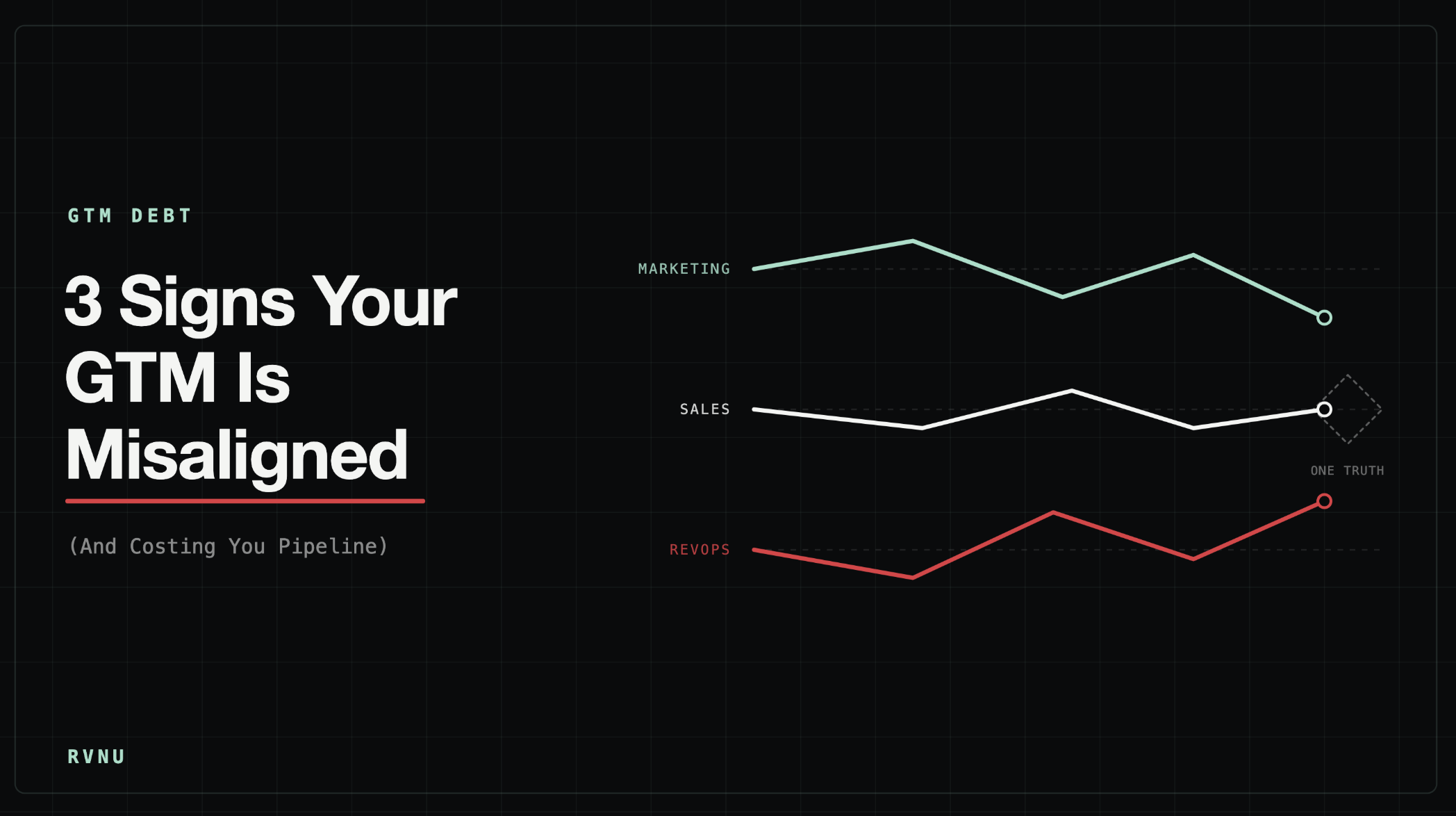
Revenue teams rarely wake up one morning to discover their go-to-market strategy is misaligned. More often, it happens gradually. Pipeline becomes less predictable, forecasting becomes harder to trust, and Marketing and Sales begin interpreting the same numbers in different ways. Everyone can point to symptoms, but no one can confidently explain the underlying cause.
If you've ever sat through a pipeline review where every person in the room had a different explanation for why the numbers were off, you've already experienced what this can look like. Marketing points to declining conversion rates. Sales points to poor lead quality. Leadership questions execution. The discussion becomes focused on individual functions rather than the system connecting them.
That moment is worth paying attention to. Not because someone is necessarily wrong, but because when every team sees a different version of the problem, it often means the organization is operating from different versions of the truth. The issue isn't simply pipeline performance. It's that the underlying go-to-market system is no longer providing a shared understanding of how revenue is created.
"When every team sees a different version of the problem, they're usually operating from different versions of the truth."
GTM misalignment rarely announces itself directly. Instead, it quietly accumulates beneath the surface until it begins affecting pipeline, forecasting, customer acquisition, and ultimately growth. The encouraging news is that these issues usually leave recognizable patterns long before they become major business problems.
Sign #1: Pipeline Performance Swings That Don't Have a Clear Explanation
Every revenue organization experiences fluctuations in performance. Markets change, seasonality exists, and individual sales performance naturally varies over time. Those changes alone are not necessarily signs of misalignment.
The more interesting pattern appears when pipeline fluctuates dramatically from one period to the next without a clear operational explanation. One quarter significantly outperforms expectations, while the next falls short despite similar activity levels. Conversations immediately shift toward individual performance, yet the numbers never seem to point to one consistent cause.
Most organizations naturally ask questions like:
- Which reps underperformed?
- Which campaigns generated weaker leads?
- Which deals slipped?
Those are reasonable questions, but they may not be the most important ones.
When pipeline inconsistency appears at a system level rather than an individual level, we've often found it reflects inconsistency in the operating model itself. Teams may not share the same understanding of the ideal customer profile, the competitive landscape, qualification criteria, or the messaging that resonates most effectively. Individual contributors continue working hard, but they're operating from slightly different assumptions about how the business creates revenue.
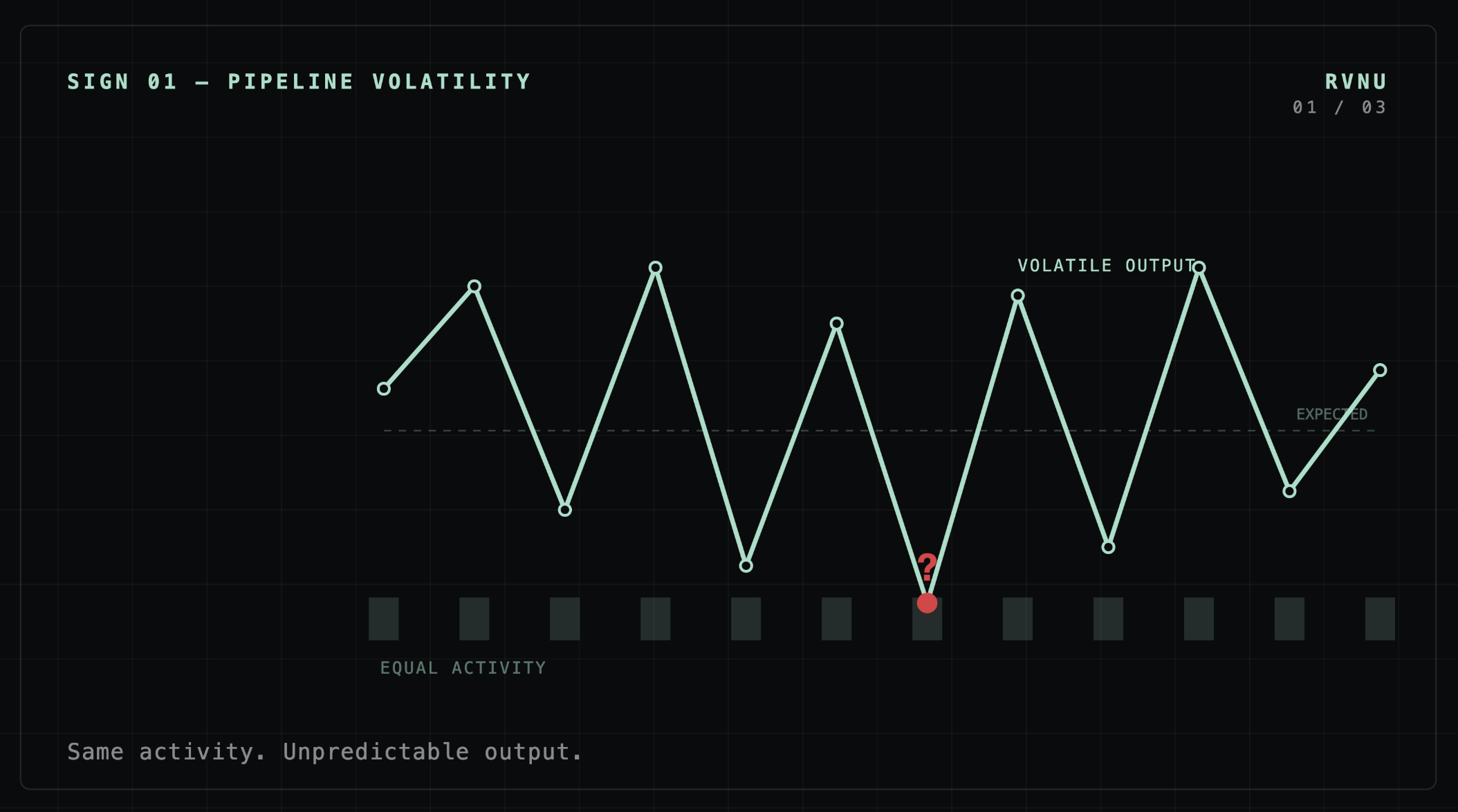
The result is inconsistency that eventually appears inside the pipeline. What initially looks like a people problem is often a systems problem. Pipeline becomes less predictable because the underlying definitions guiding execution have gradually drifted apart.
"It looks like a people or pipeline problem, but it's actually a definition and system problem."
Sign #2: Marketing and Sales Operate From Different Versions of Reality
Most organizations have documented lead definitions, handoff processes, and lifecycle stages somewhere. The existence of documentation, however, does not necessarily mean those definitions are shaping day-to-day execution.
One of the clearest indicators of GTM misalignment is when Marketing and Sales begin operating from different interpretations of what success looks like. Marketing may believe they're delivering qualified demand because campaign metrics continue improving. Sales may believe lead quality is declining because the conversations they're having don't reflect the qualification criteria marketing is using.
Both teams may be acting rationally based on the information available to them, yet neither team is evaluating performance through the same operational lens. This is where pipeline often begins leaking. Leads move between teams without a shared understanding of qualification, and feedback loops become inconsistent over time.
One observation that surprises many leaders is that healthy alignment often includes productive tension. Marketing and Sales should regularly discuss what defines a qualified lead, whether the ideal customer profile still reflects reality, and which messaging is actually converting into revenue. Those conversations are not signs that alignment is failing. They are evidence that both teams are actively maintaining a shared operating model.
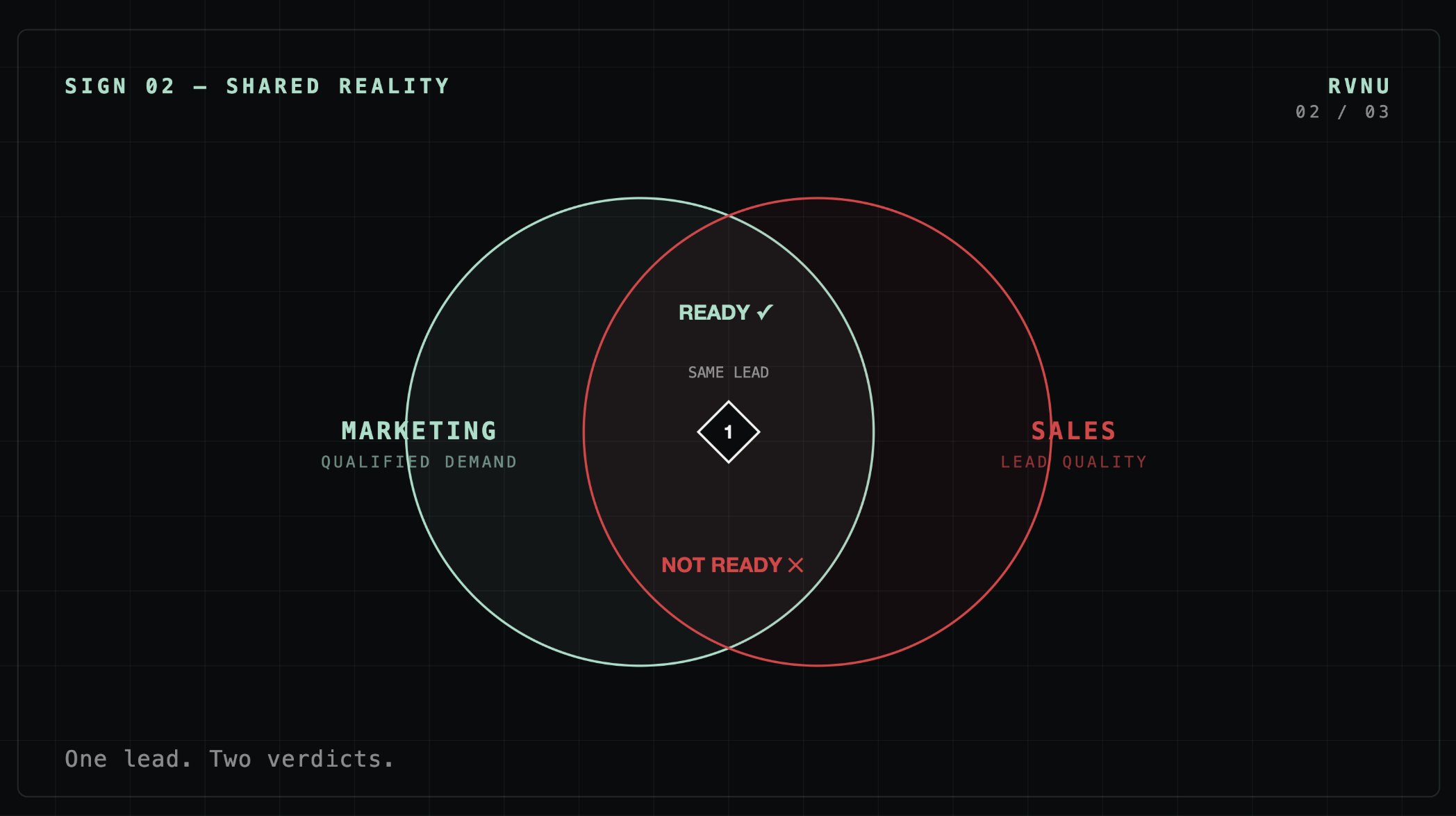
When those conversations stop happening altogether, a different risk emerges. Instead of collaborating around common definitions, each team quietly optimizes for its own objectives. Marketing focuses on one version of lead quality while Sales qualifies opportunities differently in practice. The absence of ongoing dialogue doesn't indicate harmony. It often indicates that the teams are no longer operating from the same foundation.
"Alignment doesn't mean harmony. It means shared standards."
Organizations rarely lose pipeline because Marketing or Sales stopped working hard. More often, they lose pipeline because both teams are executing effectively against different definitions of success.
Sign #3: Your CRM Can't Tell a Clear Story
For many operators, the CRM becomes one of the clearest indicators of GTM health. Imagine opening a pipeline report only to find yourself explaining why certain opportunities don't actually belong in the stage they're currently sitting in. Perhaps one team uses a stage differently than another, or forecasting requires constant verbal context because reports don't accurately represent reality.
Those explanations are easy to normalize over time, but they're also valuable diagnostic signals. Many organizations treat CRM quality as a reporting problem. In reality, inconsistent data often reflects inconsistent execution.
Systems only capture what teams actually do. If pipeline stages don't align with how buyers make decisions, if ownership changes aren't clearly defined, or if handoffs occur differently across teams, the CRM will naturally struggle to produce reliable information.
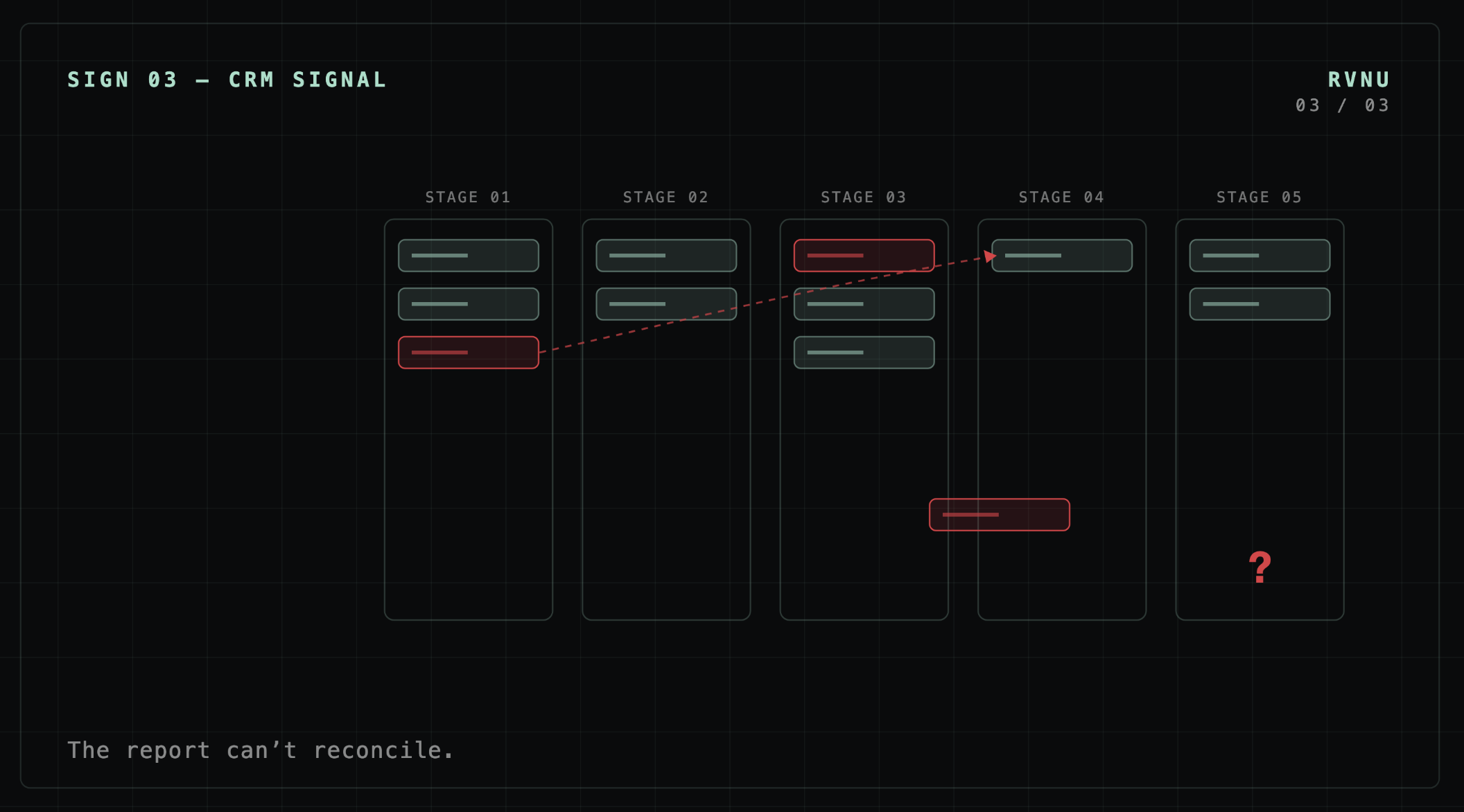
Dirty data is frequently the symptom rather than the root cause. When a go-to-market system has operational clarity, that clarity usually appears inside the data. Reports become easier to interpret, forecasts become more reliable, and pipeline movement reflects actual customer progression rather than individual habits or workarounds.
"Dirty CRM data is almost always a process signal."
What These Three Signs Have in Common
Although these symptoms appear different on the surface, they often point back to the same underlying issue. Unpredictable pipeline, disconnected handoffs, and unreliable CRM data each represent a different way that GTM misalignment becomes visible. None of them necessarily indicate poor employees, ineffective leadership, or failing technology. Instead, they suggest that the shared operating model connecting Marketing, Sales, Customer Success, and Revenue Operations may no longer be fully aligned.
As organizations grow, launch new products, enter different markets, or evolve their ideal customer profile, these forms of misalignment naturally emerge. The challenge isn't preventing them entirely. The challenge is recognizing them before they become embedded in everyday operations.
"Most teams interpret these as performance problems when they're actually alignment problems."
Turning Recognition Into Action
If any of these patterns feel familiar, there is no reason for alarm. They are remarkably common among organizations that are scaling quickly, entering new markets, or evolving beyond founder-led growth. Growth introduces complexity, and complexity naturally creates opportunities for systems to drift out of alignment.
The important step is recognizing that these symptoms deserve attention before they become accepted as "the way things work." Pipeline inconsistency, disconnected handoffs, and unreliable reporting are rarely isolated operational issues. More often, they are signals that the underlying go-to-market foundation needs to be revisited.
That doesn't necessarily require new technology, additional headcount, or another sales methodology. More often, it requires greater clarity around definitions, processes, ownership, and the shared operating model guiding revenue execution.
If you've recognized one or more of these patterns in your own organization, it may be time to step back and evaluate the foundation supporting your go-to-market motion. Our GTM Debt Assessment was built to help organizations uncover where alignment is breaking down so they can address root causes before they become growth constraints.

Author

For weekly RVNU growth insights, subscribe to our Substack newsletter
Join over 2,000 subscribers!