
Why Most B2B SaaS Revenue Never Compounds
Every venture pitch shows the same picture. Triple, triple, then double, double, double. A clean line from one million in revenue to $70M in six years.
It is a picture of compounding, however it rarely shows the mechanism that produces it. The numbers below are a simple illustration, built to make that mechanism visible.
What actually produces the curve
The critical mechanism is retention.
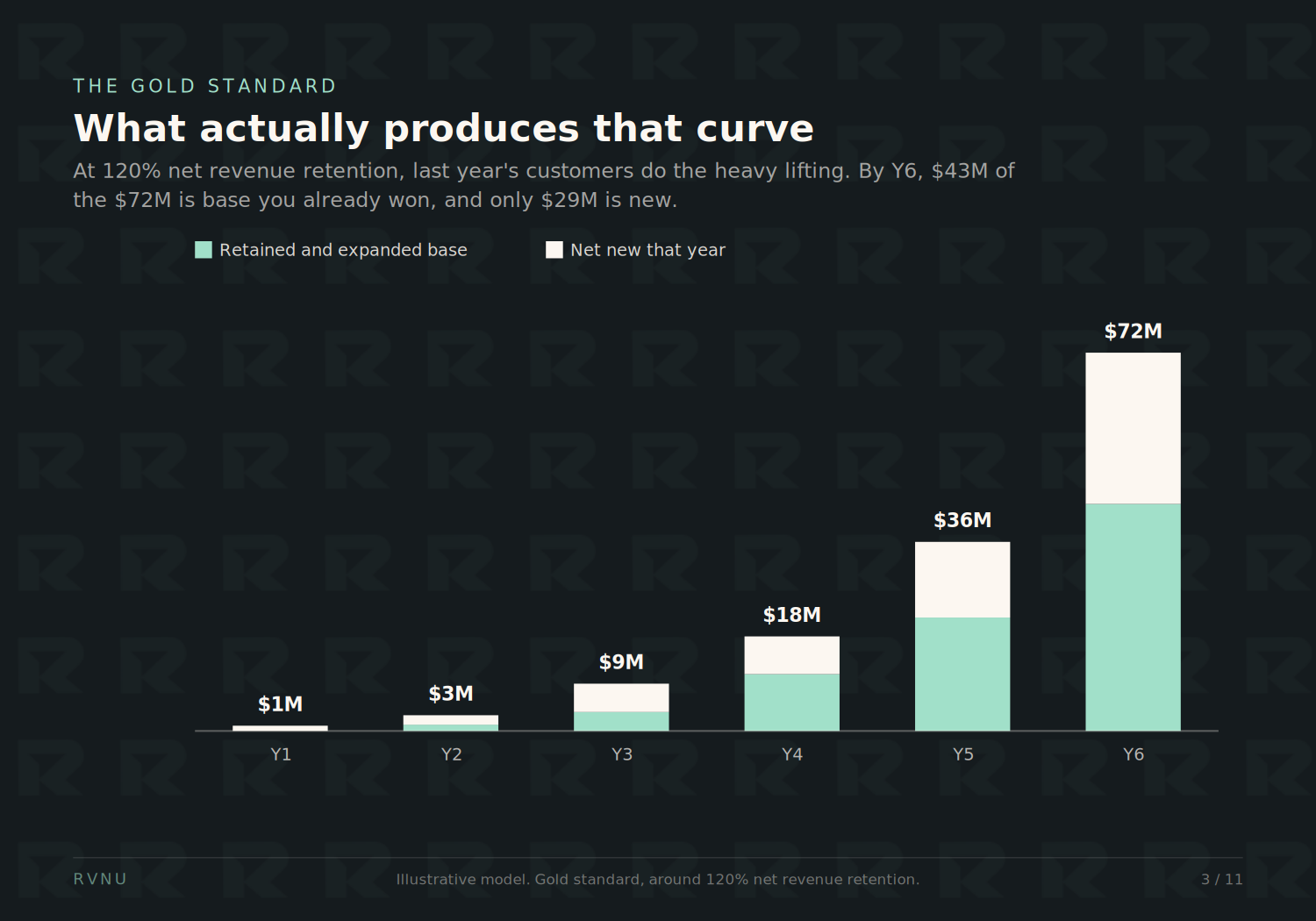
At 120% net revenue retention, last year's customers do most of the work. They stay, and over time they spend more. By year six, the majority of the number is revenue you already won in prior years. The new business you add each year lands on top of a base that is retained and grown organically.
That is how compounding works in SaaS, and what grounds many tech valuations. The base carries the company. New sales accelerate it.
What usually happens instead
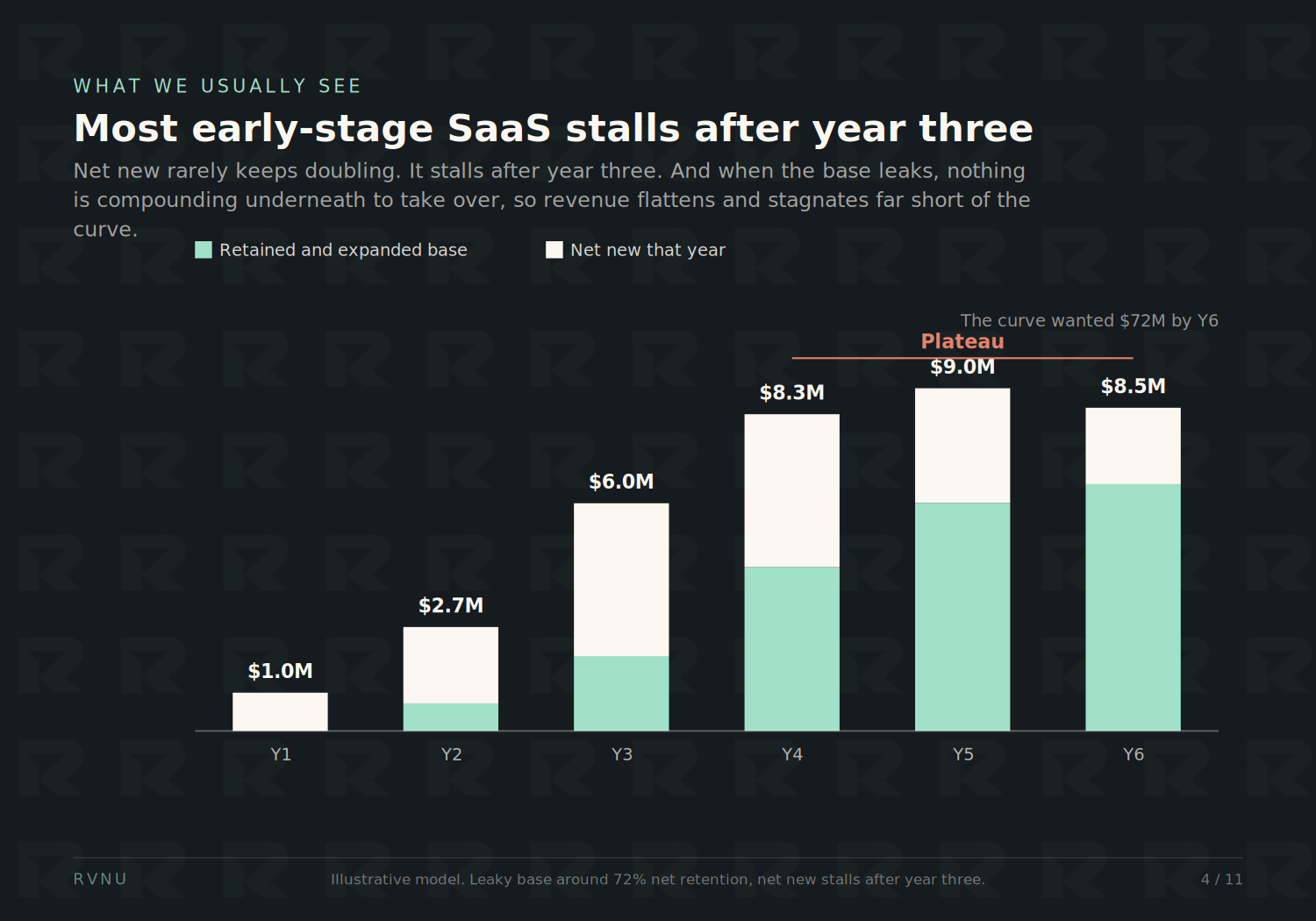
The majority of venture funded early-stage B2B SaaS startups do not compound.
Net new often slows after year three. That alone is survivable. A leaking install base is not. Lose 40% of your logos a year and there is nothing compounding underneath to carry the company once new sales slow. The topline flattens, well short of the curve.
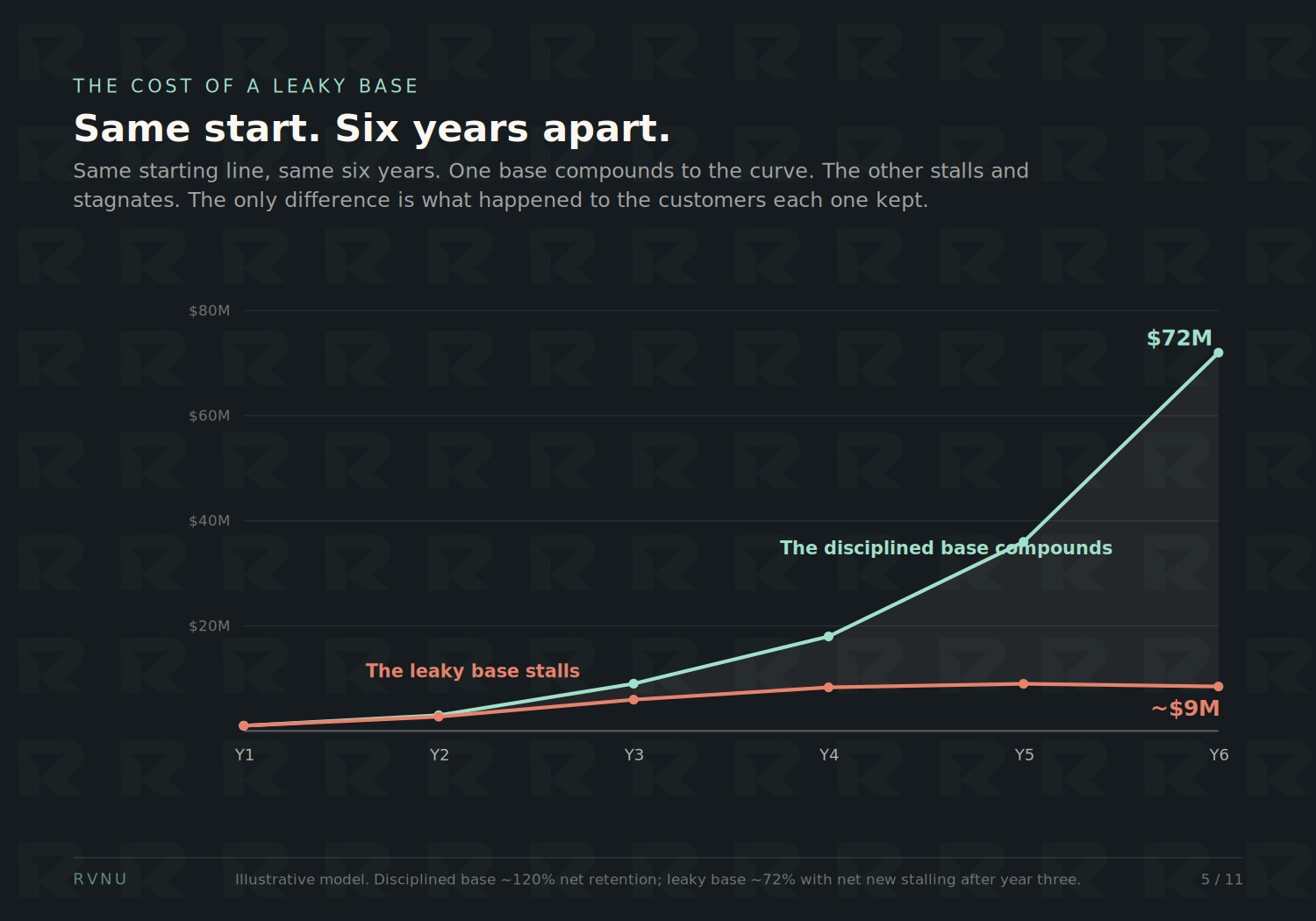
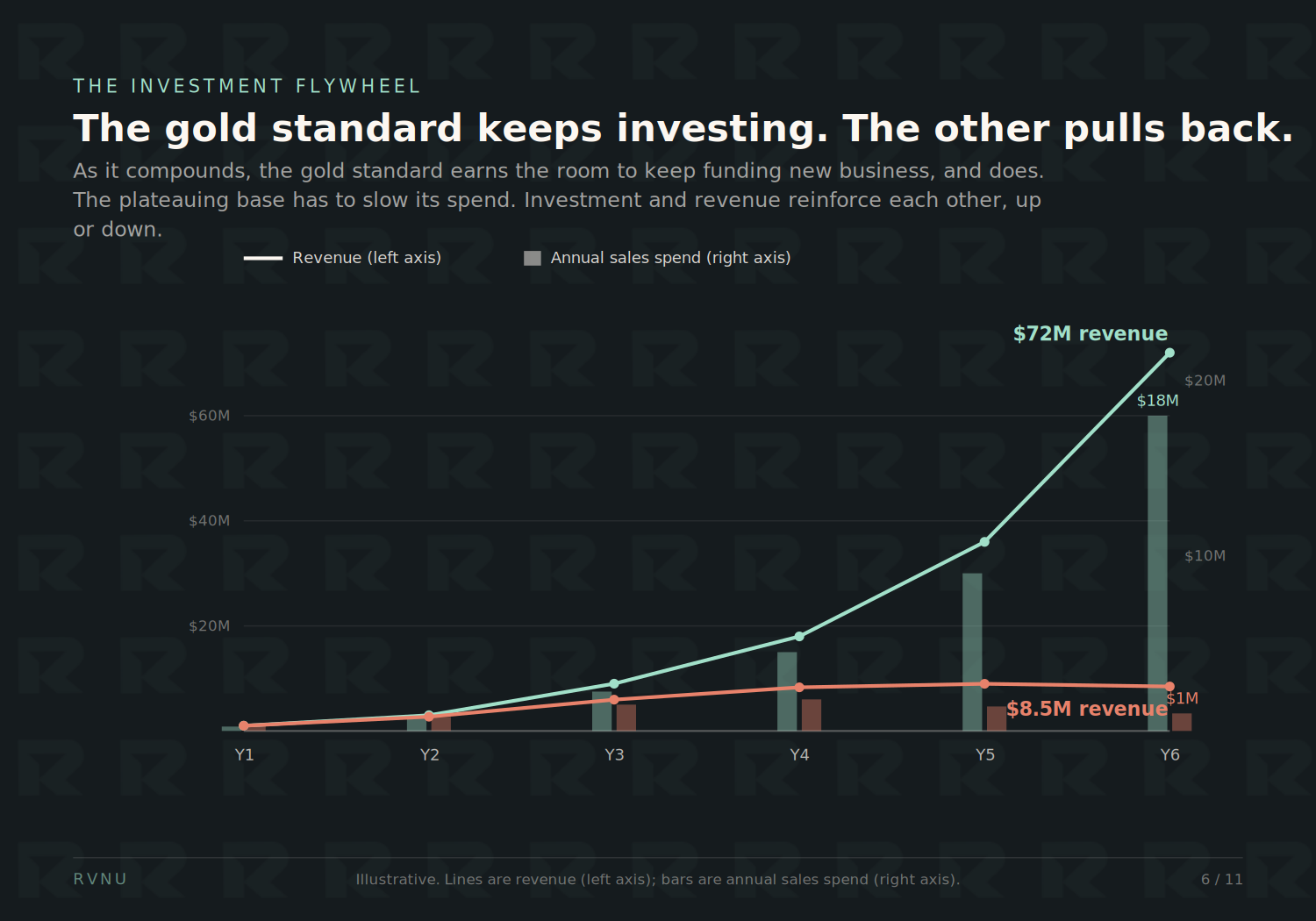
Same starting point. Same six years. One base is compounding whilst the other stagnates. The key difference is the ability to retain and grow the client base.
The investment diverges too
A company that compounds earns the room to keep investing in growth, and it does. A company that plateaus has to pull its sales spend back, because a flat topline cannot fund it. Spend and revenue reinforce each other in both directions. One company accelerates. The other retreats. The start difference of the trajectories is clear to see.
Where it is actually decided
This divergence is often determined much earlier in the growth phase of a startup than most people realize.
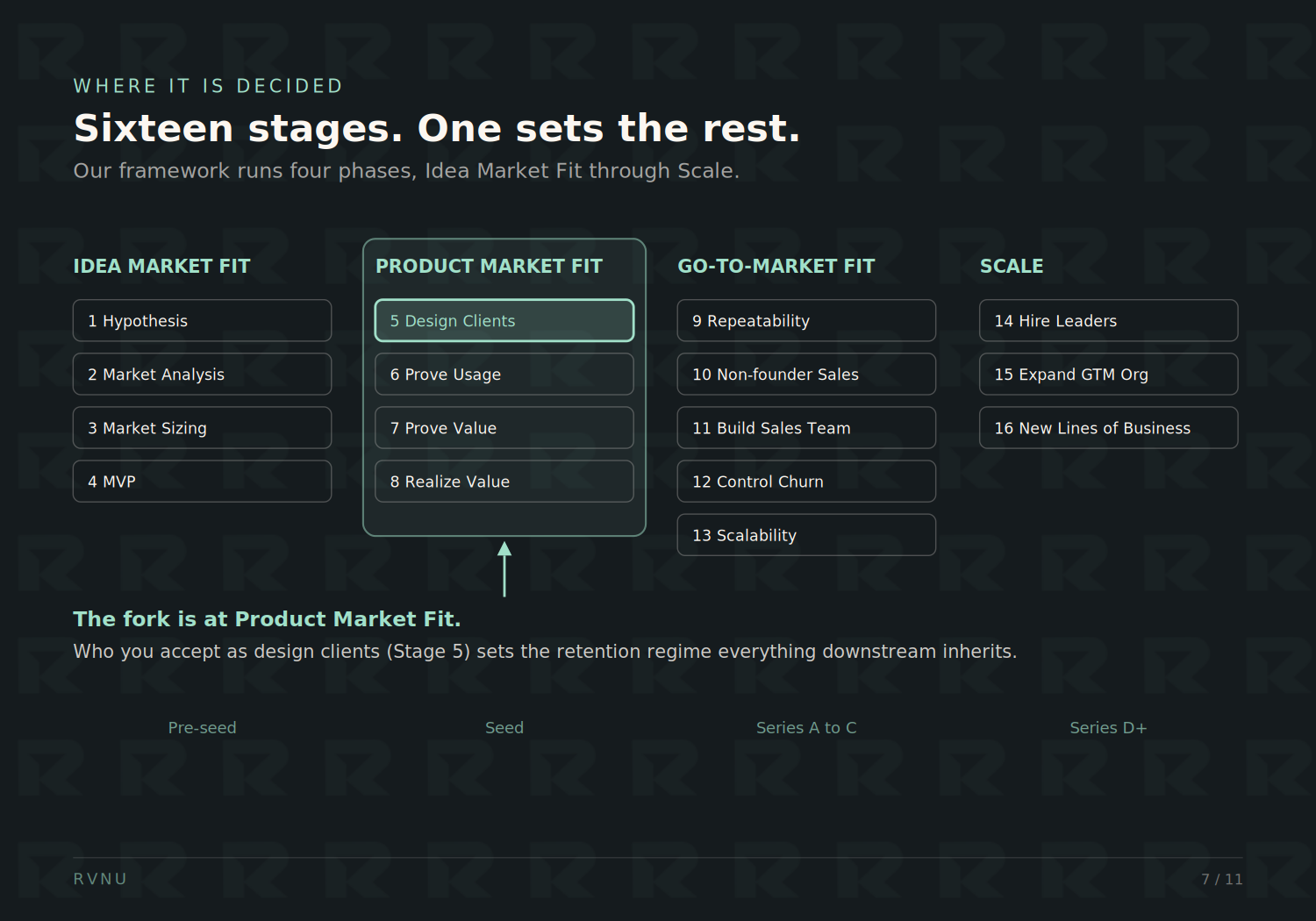
Our framework runs sixteen stages across four phases, from Idea Market Fit to Scale. The fork sits early, at Stage 5, Design Clients. Who you accept as a design client sets the retention regime that everything downstream inherits. Choose the profile well and the base compounds. Choose it loosely and you spend the next four years selling to customers you were always going to lose.
Your sales team inherits your mix
Here is what most founders miss.
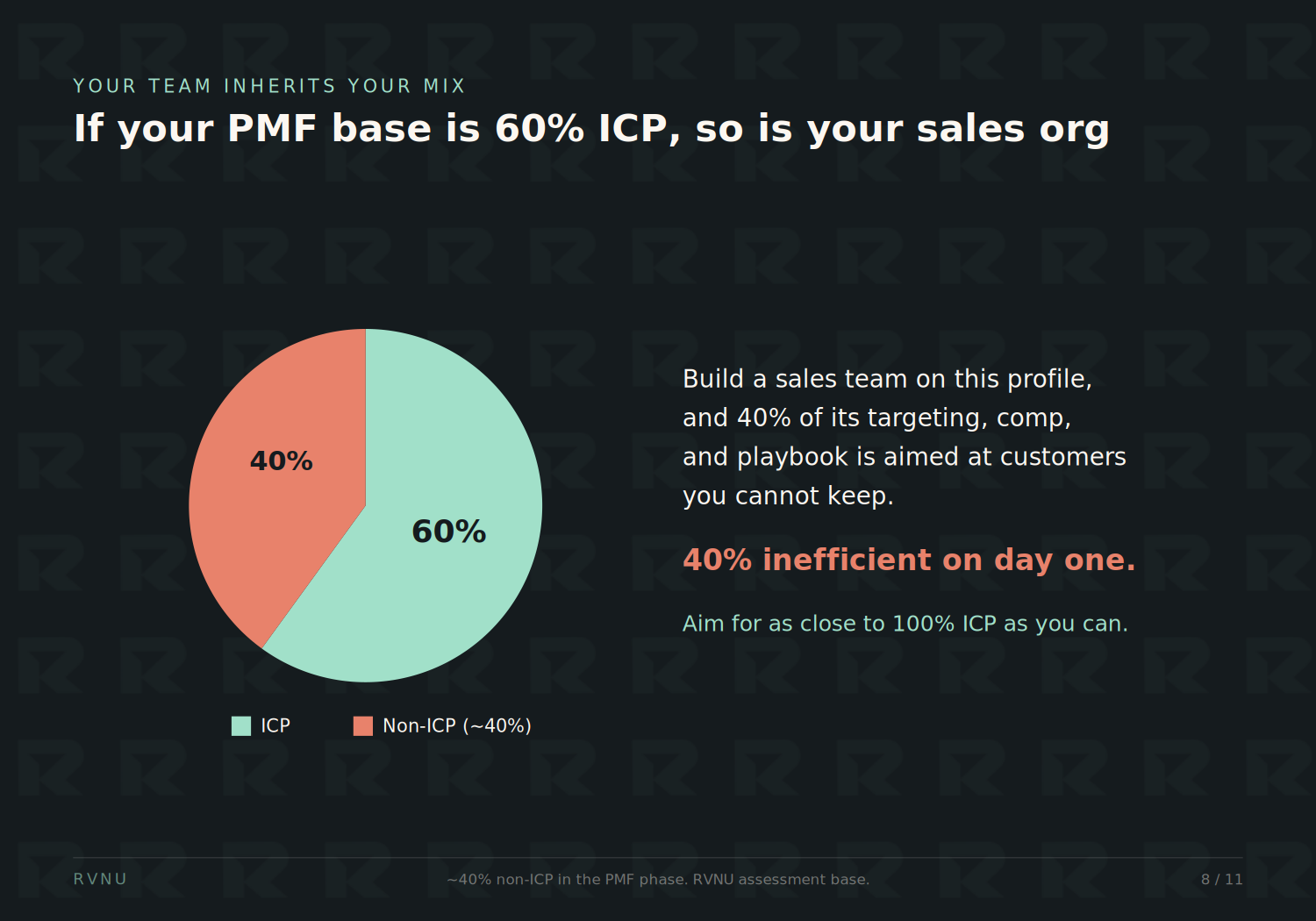
If your product market fit base is 60% ideal customer and 40% off-profile, your sales organization gets built on that same split. Across RVNU's assessment base, roughly 40% of revenue in the PMF phase comes from non-ICP customers.
Hire and train a team against that base, and 40% of its targeting, its compensation, and its playbook is aimed at customers you cannot keep. The team is inefficient on day one, and without a course correction you're in serious trouble.
The real risk is not failure
A leaky base rarely looks broken at first glance. The top line revenue grows for a while. The economics look kind of acceptable. Often there are no major alarm bells. Across the 200-plus companies we have worked through, this is the pattern that hides the longest. The cost does not arrive as a broken metric. It arrives as more capital burned to grow, more dilution at every round, and a ceiling lower than the same company could have reached. You can see how this plays out across our case studies.
The question worth sitting with
How much of your growth is built on revenue that will not compound?
Most founders have never put a number on it. The honest answer is the starting point for everything that follows. Being willing to see where your GTM actually stands is the prerequisite for scaling revenue cleanly.
You can see your score at gtmscore.ai.
Wayne


Author

For weekly RVNU growth insights, subscribe to our Substack newsletter
Join over 2,000 subscribers!